
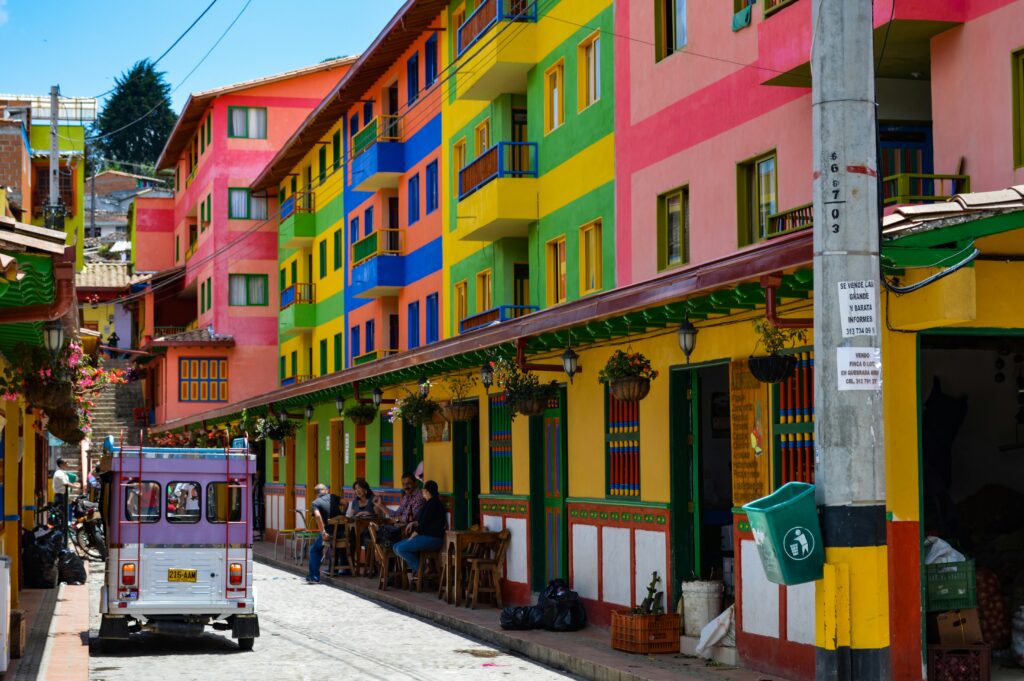
A practical snapshot for overseas retirees
Best for
Retirees seeking affordability with strong urban healthcare options
People comfortable living in large, dynamic cities
Those open to cultural immersion and learning the language
Retirees who value climate choice and lifestyle flexibility
At a glance
- Cost of living: Low to Moderate
- Healthcare: High quality (urban centers)
- Residency: Moderate
- English: Low to Moderate
Cost of living overview
Colombia offers a cost of living that many retirees find comfortably lower than North American norms, particularly for housing, food, transportation, and personal services.
Costs vary significantly by city and neighborhood. Major urban centers can support a wide range of lifestyles, from very affordable local living to more upscale, internationally oriented options. Outside premium districts, monthly expenses tend to remain predictable and manageable.
Many retirees find that Colombia allows for a comfortable lifestyle without constant budgeting, especially when daily routines rely on local markets, public transportation, and neighborhood services.
Healthcare reality
Healthcare is one of Colombia’s strongest assets for retirees.
Major cities offer modern hospitals, experienced specialists, and advanced diagnostics at costs that feel accessible by North American standards. Both public and private healthcare options are available, with many retirees using a combination of the two.
Care quality is generally high in urban areas, though access can be more limited in smaller towns. Spanish is typically required for navigating the system comfortably, though English-speaking providers exist in some private facilities.
Residency basics
Colombia offers residency pathways for retirees based on income or financial independence.
The process is structured and rule-based, with clearly defined requirements and documentation standards. While paperwork and timelines require attention, residency is generally achievable for retirees with stable income.
Residency often assumes a meaningful connection to the country, making Colombia more attractive to those planning a primary base rather than a short-term or purely seasonal stay.
What it feels like to live in Colombia
Living in Colombia often feels energetic, social, and urban.
Daily life is shaped by neighborhood culture, public spaces, and strong social interaction. Cities tend to be lively and people-centered, with a visible emphasis on relationships, routines, and shared spaces.
Culturally, Colombia values warmth, adaptability, and personal connection. For retirees open to learning the language and engaging locally, integration can feel rewarding. For others, the pace and intensity of city life may take adjustment.
Lifestyle & trade-offs
Why people choose Colombia
- Affordable cost of living
- High-quality healthcare in major cities
- Pleasant climates in several regions
- Strong food culture and social life
- Growing expat communities
Common challenges
- Language barriers outside expat circles
- Regional differences in safety and infrastructure
- Urban density and noise in large cities
- Bureaucracy that requires patience
Who Colombia is not for
Colombia may not suit retirees seeking quiet, small-town living everywhere, those unwilling to learn some Spanish, or anyone uncomfortable navigating large urban environments. It can also frustrate those who expect uniform standards across all regions.
Common Questions
Is Colombia safe for retirees, or is that reputation still accurate?
Colombia’s safety reputation has improved significantly over the past two decades, but it remains uneven across regions and neighborhoods. Major cities like Medellín, Bogotá, and Cartagena have areas that are safe, well-policed, and heavily populated by expats and locals alike. However, certain neighborhoods, rural areas, and border regions still experience higher crime rates and should be avoided. Most retirees find that safety is manageable with awareness—choosing the right neighborhood, avoiding displays of wealth, and integrating into local communities. Colombia is no longer the country of its past reputation, but it’s not uniformly safe everywhere either.
How much Spanish do I really need to live comfortably?
Functional Spanish is essential for navigating daily life in Colombia. While you can get by with minimal Spanish in expat-heavy neighborhoods or with translators for occasional needs, independence requires at least conversational ability. Healthcare appointments, government offices, landlords, utility companies, and most service providers operate in Spanish. Even in cities with expat communities, relying entirely on English limits your options and creates ongoing friction. Most retirees find that investing in language learning early makes life significantly easier and more enjoyable. Comfort doesn’t require fluency, but it does require enough Spanish to handle routine interactions without constant assistance.
Which Colombian cities are actually best for retirees—Medellín, Bogotá, or somewhere else?
There’s no single “best” city—it depends on priorities. Medellín offers spring-like weather year-round, strong infrastructure, and a large expat community, but it’s also more expensive and crowded. Bogotá has the most comprehensive healthcare, cultural depth, and urban amenities, but sits at high altitude and feels more chaotic. Cartagena provides coastal living and historic charm but is hot, humid, and tourist-heavy. Smaller cities like Pereira, Manizales, or Bucaramanga offer lower costs and slower pace but fewer services and expat networks. Most retirees test multiple locations before committing, as climate, altitude, and lifestyle preferences vary widely.
What’s the reality of getting residency based on pension income?
Colombia’s pensioner visa (Visa de Pensionado) is structured and achievable but requires meeting specific income thresholds—currently tied to multiples of the Colombian minimum wage. You’ll need to provide proof of recurring pension income, undergo background checks, and navigate a multi-step application process that can take several months. The process is bureaucratic and requires accurate documentation, often with apostilles and translations. Many retirees use immigration attorneys to manage the process, which adds cost but reduces errors and delays. Once approved, the visa provides renewable residency and eventual pathways to permanent status, making it worthwhile for those committed to staying long-term.
Want the deeper comparison?
This profile covers the fundamentals.
Overseas by Design evaluates Colombia alongside other retirement destinations by examining real monthly budgets, residency pathways, healthcare access, and the practical trade-offs that emerge when countries are assessed using the same framework.