
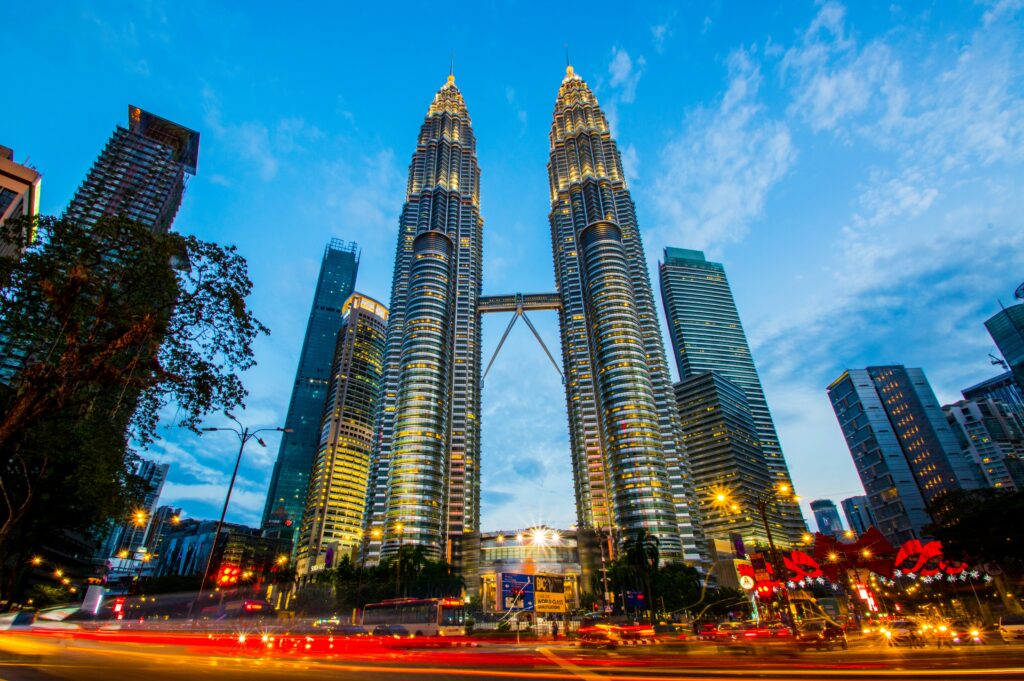
A practical snapshot for overseas retirees
Best for
Retirees seeking low living costs with modern infrastructure
People who value excellent private healthcare and English usage
Those comfortable living in a multicultural, non-Western society
Retirees open to urban living or well-developed secondary cities
At a glance
- Cost of living: Low
- Healthcare: High quality (private system)
- Residency: Moderate
- English: High
Cost of living overview
Malaysia offers a cost of living that many retirees find comfortably low without feeling spartan. Everyday expenses such as groceries, dining out, transportation, and personal services are generally affordable and predictable.
Housing costs vary by location and housing type, but good-quality apartments in urban areas are often available at prices that feel reasonable by North American standards. Outside major city centers, costs drop further without a significant loss of amenities.
Many retirees find that Malaysia allows for a high standard of daily comfort—air conditioning, dining out, household help—without constant financial trade-offs.
Healthcare reality
Healthcare is one of Malaysia’s strongest advantages for retirees.
The private healthcare system is modern, efficient, and widely respected. Hospitals and clinics in major cities offer advanced diagnostics, experienced specialists, and English-speaking staff. Appointment wait times are typically short, and costs remain accessible, even for uninsured care.
Public healthcare exists but is rarely used by foreign retirees. Most rely on private hospitals, either paying out of pocket or using private insurance. For many, healthcare in Malaysia feels professional, smooth, and reassuring.
Residency basics
Malaysia offers long-stay options for retirees, typically based on financial qualifications.
Residency programs are clearly defined but subject to policy adjustments over time. Application processes are structured and documentation-heavy, with financial thresholds and renewal requirements that must be maintained.
Many retirees find residency achievable with planning, though it benefits those who are comfortable staying informed and adapting to regulatory changes.
What it feels like to live in Malaysia
Living in Malaysia often feels easy and functional.
Daily life is convenient, with modern shopping centers, reliable internet, and accessible services. English is widely spoken, particularly in urban areas, which lowers the language barrier for many retirees.
Culturally, Malaysia is diverse and generally reserved, blending Malay, Chinese, Indian, and international influences. For retirees open to a multicultural environment, this creates a rich and balanced daily experience. For others, the lack of a single dominant cultural rhythm can feel unfamiliar.
Lifestyle & trade-offs
Why people choose Malaysia
- Low cost of living with high daily comfort
- Excellent private healthcare
- Widespread English usage
- Modern infrastructure and services
- Multicultural, generally tolerant society
Common challenges
- Heat and humidity year-round
- Residency rules that can change over time
- Less visible expat social life outside major cities
- Cultural norms that may feel reserved or indirect
Who Malaysia is not for
Malaysia may not suit retirees seeking a traditional Western cultural environment, those uncomfortable with a tropical climate, or anyone who prefers highly predictable long-term residency rules. It can also feel quiet for people who rely heavily on large expat social scenes.
Common Questions
What’s the MM2H program, and why did it become so much harder to qualify for?
Malaysia My Second Home (MM2H) was long considered one of Asia’s most accessible long-stay visa programs, offering 10-year renewable residency with minimal requirements. In 2021, Malaysia drastically increased financial thresholds—raising required liquid assets to RM1.5 million (approximately $350,000 USD) and minimum monthly income to RM40,000 (approximately $9,300 USD), making it unattainable for most middle-income retirees. The changes were meant to attract wealthier applicants but alienated the program’s core demographic. Malaysia has since introduced alternative visa categories with lower thresholds, but they often come with shorter validity periods or additional restrictions. The MM2H still exists but now targets high-net-worth individuals. Most retirees today explore alternative visa options or use renewable tourist visas while monitoring policy changes.
Is Kuala Lumpur the best place to retire, or should I consider Penang or other cities?
Each city serves different priorities. Kuala Lumpur offers the most comprehensive infrastructure, international connections, shopping, dining, and healthcare options, but it’s the most expensive and urban-dense. Penang provides a strong expat community, excellent food culture, walkable Georgetown, beach access, and good healthcare, with lower costs than KL—it’s many retirees’ preferred balance of comfort and affordability. Johor Bahru offers proximity to Singapore and lower costs but feels more industrial and less culturally rich. Smaller cities like Ipoh or Melaka provide authentic Malaysian life at lower prices but with fewer expat networks and services. “Best” depends on whether you prioritize infrastructure and convenience (KL), community and culture (Penang), or affordability and simplicity (smaller cities).
How does Malaysia compare to Thailand for retirement—which offers better value?
Malaysia and Thailand both offer low costs and good healthcare, but with different trade-offs. Thailand generally edges out Malaysia on rock-bottom affordability, especially for food, housing in secondary cities, and a more established retirement visa (though also recently tightened). Malaysia offers better English proficiency, cleaner infrastructure, and arguably superior private healthcare facilities in major cities. Thailand has larger, more visible expat communities and a more developed tourism/expat service ecosystem. Malaysia feels more orderly and modern; Thailand feels more flexible and socially vibrant. For pure budget and social scene, Thailand often wins. For ease of English communication and polished infrastructure, Malaysia appeals more. Both require navigating changing visa rules, so neither offers long-term certainty.
What’s it like living in a Muslim-majority country as a Western retiree?
Malaysia is Muslim-majority but remarkably diverse and tolerant in practice, especially in urban areas. Alcohol is available in non-Muslim establishments, pork is sold in Chinese supermarkets, and dress codes are relaxed outside religious sites. The cultural atmosphere blends Malay Muslim traditions with significant Chinese and Indian populations, creating a cosmopolitan environment where Western retirees rarely feel restricted. That said, Islamic holidays affect business hours, public displays of affection are frowned upon, and certain conservative social norms exist—particularly outside major cities. Friday prayers and the call to prayer are part of daily life. Most Western retirees find Malaysia’s multiculturalism and moderate Islam comfortable and unobtrusive, but those seeking highly secular or Western-aligned cultural environments might feel the religious influence more than expected.
Want the deeper comparison?
This profile covers the fundamentals.
Overseas by Design evaluates Malaysia alongside other retirement destinations by examining real monthly budgets, residency pathways, healthcare access, and the practical trade-offs that emerge when countries are assessed using the same framework.