
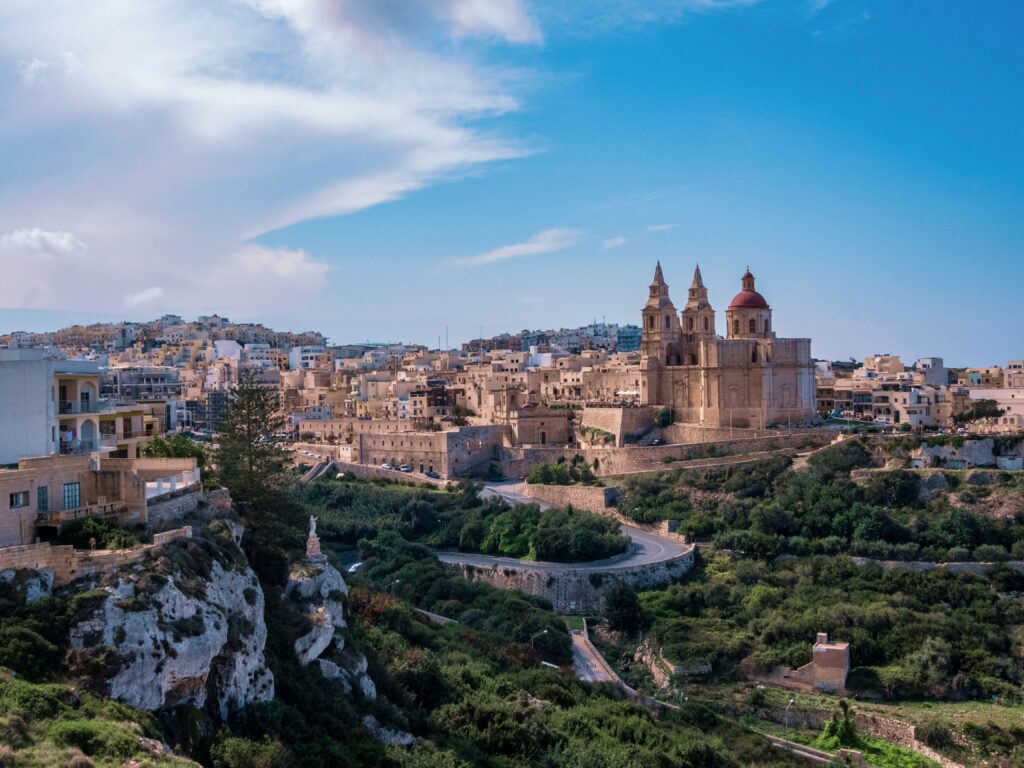
A practical snapshot for overseas retirees
Best for
Retirees seeking safety, structure, and English-speaking daily life
People who value accessible healthcare and compact living
Those comfortable with island life and limited geographic scale
Retirees looking for a stable European base with mild winters
At a glance
- Cost of living: Moderate to High
- Healthcare: High quality
- Residency: Moderate
- English: High
Cost of living overview
Malta offers a cost of living that reflects its small size and high demand. Everyday expenses such as groceries, utilities, and transportation are generally manageable, while housing costs can be elevated, particularly in desirable coastal and central areas.
The limited housing supply and strong demand place upward pressure on rents and property prices. Many retirees find better value by looking slightly away from the most popular neighborhoods while still retaining easy access to services.
Living comfortably in Malta often means prioritizing location efficiency and lifestyle convenience over space.
Healthcare reality
Healthcare is a strong pillar of life in Malta.
The public healthcare system provides comprehensive coverage once enrolled and is widely regarded as reliable and accessible. Private healthcare options are also available and commonly used for faster appointments or additional choice.
Medical professionals are well trained, facilities are modern, and English is used throughout the healthcare system. For many retirees, healthcare in Malta feels dependable and well integrated into daily life.
Residency basics
Malta offers residency options for retirees based on financial independence and health coverage.
The process is structured and documentation-heavy, with clear requirements and formal procedures. While timelines can vary, the system is predictable once understood.
Residency programs often come with specific financial and compliance obligations, and many retirees work with professional advisors to ensure applications and ongoing requirements are handled correctly.
What it feels like to live in Malta
Living in Malta often feels compact, orderly, and social.
Daily life is shaped by the island’s scale—commutes are short, services are concentrated, and communities are tightly knit. English is widely spoken, reducing language barriers in everyday interactions.
Culturally, Malta blends Mediterranean rhythms with British-influenced systems. For retirees who appreciate structure without formality and community without isolation, this balance can feel comfortable. Others may find the limited physical space restrictive over time.
Lifestyle & trade-offs
Why people choose Malta
- English as an official language
- Strong healthcare system
- High levels of safety and stability
- Compact geography and easy navigation
- Mild Mediterranean climate
Common challenges
- High housing costs relative to size
- Limited space and geographic variety
- Crowding during peak seasons
- Dependence on imports for many goods
Who Malta is not for
Malta may not suit retirees seeking low living costs, abundant space, or varied landscapes. It can also feel confining for those who prefer large countries or frequent changes of environment.
Common Questions
What are Malta’s residency programs for retirees, and which one is right for me?
Malta offers several pathways, with the most common being the Malta Retirement Programme (MRP) and the Ordinary Residence scheme. The MRP targets non-EU retirees with pension income, offering favorable tax treatment (15% on foreign income remitted to Malta, with minimum annual tax thresholds). It requires proof of stable pension income, purchasing or renting qualifying property, and maintaining private health insurance. The Ordinary Residence scheme is simpler but offers no special tax benefits—it’s based on financial self-sufficiency and suitable for those not seeking tax incentives. EU/EEA citizens can establish residency more easily under standard EU rules. The “right” program depends on your income structure, tax situation, and whether you’re EU or non-EU. Most non-EU retirees with pensions pursue the MRP for tax benefits, while those with lower incomes or simpler needs may use Ordinary Residence.
Is Malta’s small size a benefit or does it start to feel claustrophobic?
Malta’s compactness is polarizing. Initially, many retirees appreciate the convenience—everything is within 30 minutes, services are concentrated, and daily logistics are simple. Over time, some find the lack of variety stifling—limited hiking, few weekend getaway options, repetitive dining and social scenes. The island measures roughly 27km by 14km, so geographic exploration exhausts quickly. Those who thrive value the walkability, tight-knit communities, and ease of life. Those who struggle miss open spaces, road trips, and changing scenery. Gozo (Malta’s smaller sister island) offers brief escapes, but it’s still limited. Many successful Malta retirees are homebodies, enjoy routine, or budget for regular trips off-island to break monotony. If you need variety and exploration as part of daily life, Malta’s size becomes a liability.
How does Malta’s cost of living compare to other Mediterranean countries?
Malta is more expensive than Greece, Portugal (outside Lisbon/Algarve), southern Italy, and most of Spain, but comparable to or slightly cheaper than France’s Côte d’Azur or northern Italian cities. Housing is the biggest cost driver—rents and property prices are high relative to space, especially in Sliema, St. Julian’s, and Valletta. Groceries and dining are moderate but not cheap, as most goods are imported. Utilities are reasonable. Healthcare is affordable through the public system or private insurance. Overall, Malta offers mid-to-high Mediterranean pricing with the trade-off of English fluency, excellent healthcare, and EU access. If pure affordability is the goal, Greece, Portugal, or Spain offer better value. If convenience, safety, and English matter more than cost, Malta competes well despite higher prices.
Is the expat community large enough to have a real social life?
Malta has a substantial and diverse expat community—estimates suggest 20-25% of the population is foreign-born, including EU workers, retirees, digital nomads, and international professionals. However, the community is fragmented by age, nationality, and purpose. Younger expats dominate the gaming/tech industries and nightlife scenes, while retiree communities are smaller and more dispersed. Organized expat groups exist (social clubs, activities, volunteer organizations), particularly around Sliema, St. Julian’s, and Gozo, but they’re not as large or visible as in places like Costa Rica or Portugal’s Algarve. Many retirees find their social circles through hobbies, religious communities, or local integration rather than dedicated expat networks. The upside: Malta’s small size makes it easy to build connections once you find your niche. The downside: you may need to be proactive rather than walking into a ready-made social scene. It’s enough for most, but not the robust, instant expat community some destinations offer.
Want the deeper comparison?
This profile covers the fundamentals.
Overseas by Design evaluates Malta alongside other retirement destinations by examining real monthly budgets, residency pathways, healthcare access, and the practical trade-offs that emerge when countries are assessed using the same framework.