
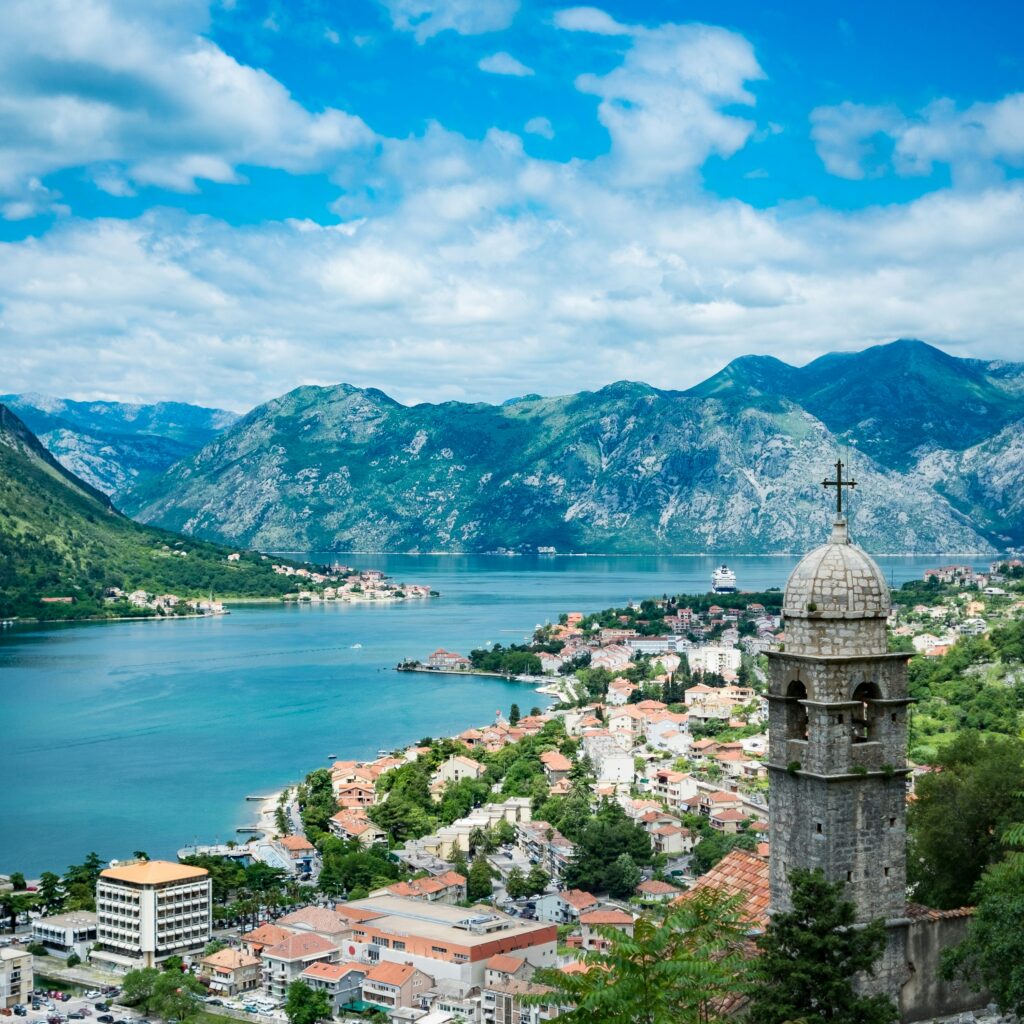
A practical snapshot for overseas retirees
Best for
Retirees seeking a quieter European lifestyle with natural beauty
People who value affordability over polish
Those comfortable living outside major expat ecosystems
Retirees drawn to coastal or small-city living rather than capitals
At a glance
- Cost of living: Low to Moderate
- Healthcare: Basic to Good
- Residency: Moderate
- English: Low to Moderate
Cost of living overview
Montenegro offers a cost of living that many retirees find attractively low by European standards. Everyday expenses such as groceries, local transportation, and dining are generally affordable, especially when relying on local products and services.
Housing costs are modest in most areas, with higher prices concentrated along the Adriatic coast and in popular towns. Inland regions and smaller cities provide significantly better value, though with fewer amenities.
Living comfortably in Montenegro is often less about spending power and more about lifestyle alignment—accepting simpler services in exchange for lower costs and a slower pace.
Healthcare reality
Healthcare in Montenegro is functional but limited.
The public healthcare system provides basic coverage to residents, and private clinics are available for routine care. However, advanced treatments, specialized diagnostics, and complex procedures are often sought outside the country.
Many retirees plan for medical travel or maintain international health insurance. For those with stable health and realistic expectations, healthcare in Montenegro is workable but requires proactive planning.
Residency basics
Montenegro offers residency pathways based on financial self-sufficiency and long-term accommodation.
The process is documentation-heavy and procedural, with requirements that must be renewed regularly. While residency is attainable, it benefits retirees who are organized and comfortable managing paperwork and renewals.
Residency often assumes a meaningful presence in the country rather than a casual seasonal arrangement.
What it feels like to live in Montenegro
Living in Montenegro often feels quiet, scenic, and understated.
Daily life moves at a relaxed pace, shaped by geography and local rhythms rather than schedules. Social life tends to be informal and community-based, particularly in smaller towns.
Culturally, Montenegro values directness and practicality. Systems can feel underdeveloped or inconsistent, but daily interactions are generally straightforward. For retirees who appreciate simplicity and natural surroundings, this can feel grounding. For others, it may feel limiting.
Lifestyle & trade-offs
Why people choose Montenegro
- Low cost of living by European standards
- Dramatic coastal and mountain landscapes
- Quiet, low-pressure daily life
- Small country with manageable scale
- Growing, though still modest, expat presence
Common challenges
- Limited healthcare infrastructure
- Fewer English speakers outside tourist areas
- Less developed services and amenities
- Seasonal rhythms that affect availability
Who Montenegro is not for
Montenegro may not suit retirees who require advanced healthcare access, rely heavily on English, or expect refined infrastructure and services. It can also frustrate those who prefer vibrant social scenes or highly developed urban environments.
Common Questions
Is Montenegro really affordable, or have coastal prices caught up with the rest of Europe?
Montenegro’s affordability is split geographically. Coastal areas—particularly Budva, Kotor, Tivat, and the Bay of Kotor—have seen significant price increases driven by tourism and foreign investment. Summer rentals, waterfront dining, and prime real estate now approach or match prices in more developed European destinations. However, these increases are seasonal and localized. Inland cities like Podgorica, Nikšić, or Cetinje remain genuinely affordable, as do coastal towns outside the main tourist circuit. Off-season prices (October-April) drop substantially even in popular areas. Most retirees find Montenegro affordable if they avoid peak-season coastal living or choose less-trafficked locations. It’s no longer uniformly cheap, but strategic location and timing choices preserve significant cost advantages over Western Europe.
What happens if I need serious medical care—are neighboring countries accessible?
Montenegro’s healthcare infrastructure cannot handle complex or specialized medical needs reliably. For serious conditions, surgeries, advanced diagnostics, or specialist care, most expats travel to neighboring countries. Croatia (Split, Dubrovnik) is closest and offers high-quality EU-standard healthcare within 1-3 hours by car. Serbia (Belgrade) provides good private hospitals at lower costs, about 4-5 hours away. Some retirees also use Turkey or go back to their home countries for major procedures. Accessibility depends heavily on where you live in Montenegro—coastal residents can reach Croatia easily; inland residents may face longer journeys. Most retirees maintain international health insurance with medical evacuation coverage or budget for regular cross-border healthcare travel. It’s manageable with planning, but not convenient.
How does Montenegro compare to Croatia or Albania for retirement?
Montenegro sits between Croatia and Albania in cost, development, and infrastructure. Croatia offers better healthcare, more reliable services, stronger tourism infrastructure, and easier EU integration, but costs significantly more—especially along the Dalmatian coast. Albania is cheaper than Montenegro, especially for housing, but has weaker infrastructure, less developed healthcare, and fewer services. Montenegro provides a middle ground: more affordable than Croatia, more developed than Albania, with dramatic scenery comparable to both. Croatia appeals to retirees prioritizing reliability and EU benefits; Albania attracts those maximizing budget and willing to rough it; Montenegro suits those seeking affordability with moderate infrastructure. All three require some language skills, though English penetration is highest in Croatian tourist zones.
Is it realistic to live in Montenegro without learning the language?
Living without Montenegrin (essentially Serbian/Bosnian/Croatian) is difficult outside tourist-heavy coastal areas. In Budva or Kotor during summer, you’ll find English speakers in hotels, restaurants, and shops, but government offices, healthcare providers, banks, and utility companies operate in Montenegrin. Even in coastal towns, off-season English availability drops sharply. Inland cities have minimal English infrastructure. Most retirees either learn conversational Montenegrin or hire local assistance for administrative tasks, healthcare navigation, and legal matters. Without language skills, you’re dependent on translators, limited to expat bubbles, and constantly navigating friction in daily tasks. It’s technically possible in tourist zones with money and help, but independence and deeper integration require at least functional language ability.
Want the deeper comparison?
This profile covers the fundamentals.
Overseas by Design evaluates Montenegro alongside other retirement destinations by examining real monthly budgets, residency pathways, healthcare access, and the practical trade-offs that emerge when countries are assessed using the same framework.