
When people hear that we’re planning to retire overseas, the assumption is almost always the same: “So you’re moving abroad full-time?”
It’s a fair question. For a lot of retirees, the dream is a full relocation. Sell everything, move abroad, start fresh somewhere warm and affordable. It’s a compelling story, and plenty of people live it well.
But that’s not our plan. We’re not leaving Canada for good. We’re designing something in between, and honestly, the more we talk to people about it, the more we realize we’re not alone in wanting that.
A Different Kind of Retirement
Our vision is to split our time roughly six to eight months in Canada and four to six months in Belize. To some people, that sounds complicated. To others, it sounds indulgent. And for a few, it probably sounds like we’re hedging our bets.
In a way, we are. But we think that’s actually smart, not timid.
Because retirement shouldn’t just be about where you live. It’s about how you want to live. And when we got honest with ourselves about what we actually wanted, moving abroad full-time didn’t check every box. Neither did staying put.
The Pull of Home
There are some things we don’t want to give up, and we spent a lot of time getting clear on what those are.
Family is the biggest one. Our kids are just entering adulthood, starting a new chapter in their own lives. And we want to be genuinely present for that exciting adventure. Not visiting once a year with luggage and jetlag, but actually showing up for birthdays, Sunday dinners, and the ordinary everyday moments that you don’t realize matter until they’re behind you. That kind of presence matters to us, and it shaped our thinking more than anything else.
There’s also something harder to name but just as real: the comfort of familiarity. Healthcare systems we understand. Friends we’ve known for decades. A sense of place that’s been built slowly over a lifetime. Leaving all of that behind completely didn’t feel like freedom to us. It felt like loss. And we decided we didn’t have to frame it that way.
The Push Toward Somewhere Else
At the same time, staying in Canada full-time didn’t feel right either.
If you live on the West Coast, you already know what winters here can be like: long, grey, and relentlessly damp. Sometimes snowy. I’ve never loved that stretch of months, and the idea of spending every single winter bundled up indoors doesn’t feel like the retirement we’ve worked toward. There’s a version of staying put that starts to feel like just enduring things, and we wanted something different.
There’s also the financial reality, and it’s worth being honest about it. Like a lot of near-retirees, we’ve run the numbers, and full-time retirement in Canada on a moderate income can feel tight. Housing costs, taxes, and everyday expenses add up quickly, and the math doesn’t always leave a lot of room to breathe. And honestly, I get tired of the endlessly escalating cost of groceries and goods. I get tired of my silent temper tantrums when I have to pay ten bucks for a handful of peppers.
Places like Belize offer something different: warmer winters, a slower pace, and the ability to stretch retirement savings further without sacrificing quality of life. If you’re curious about how different destinations compare, I’ve put together a growing collection of country profiles that break down cost of living, residency, healthcare, and lifestyle factors.
Why Part-Time Makes Sense for Us
Living part-time overseas gives us what we kept coming back to: the best of both worlds, without pretending that’s a cliche.
Time abroad means enjoying the climate, the culture, and the affordability. Time at home means staying connected to family, community, and the systems we know and trust. Neither one alone felt like enough. Together, they feel like a real plan.
It also aligns with something else we’ve been working toward: building a small income stream to support our retirement rather than relying entirely on pensions and savings.
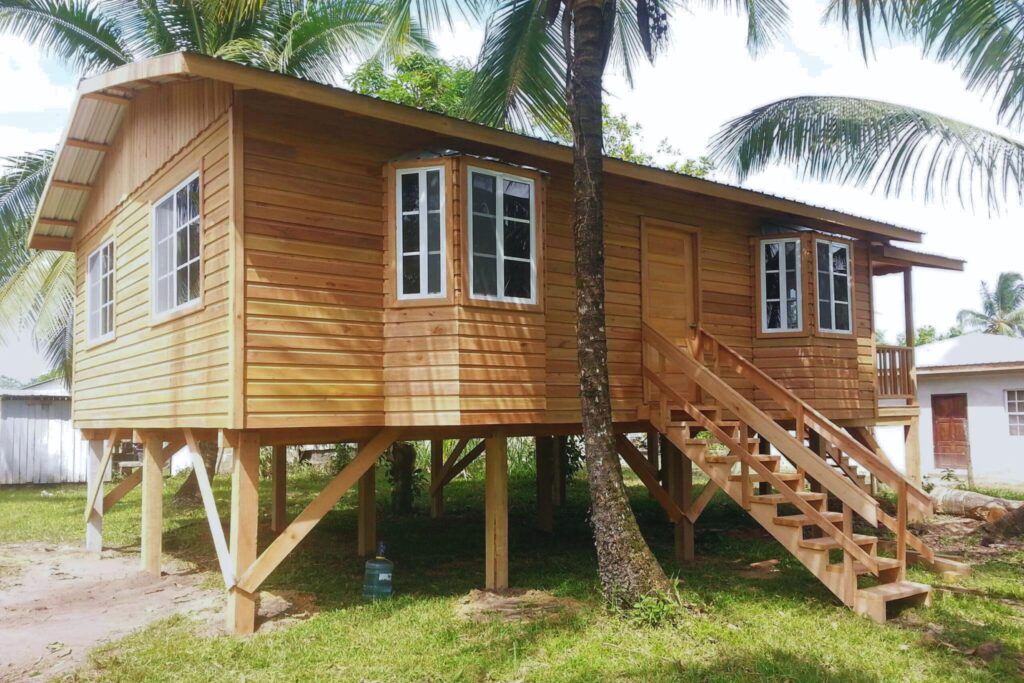
We’re planning to build a modest home in Belize, along with a couple of rental casitas on the same property. The idea isn’t complicated. When we’re back in Canada for those six months or so, the casitas generate rental income from travelers and longer-stay guests. It’s not about building an empire or becoming property developers. It’s about creating something sustainable and manageable that gives us a bit more financial flexibility and, frankly, a reason to keep the property well-tended and alive when we’re not there.
We’ve looked carefully at what that kind of small-scale rental operation realistically generates in Belize, and while it may not replace a salary, it can meaningfully supplement what we have. It gives us breathing room to cover travel and flights home. That matters when you’re designing a retirement on a real budget rather than a wishful one.
To make the whole picture work, we’re also planning to downsize here in Canada. Moving from our current, older home into a smaller condo frees up equity, reduces ongoing expenses, and simplifies daily life. That last part, honestly, feels like a win all on its own, separate from the numbers.
Retirement Isn’t One-Size-Fits-All
But one of the biggest things I’ve learned through this whole process is that there’s no single right way to retire abroad. Some people thrive with a full relocation. Others spend a season or two testing the waters before committing. And some, like us, design a rhythm that lets them move between two places they genuinely love.
The goal was never to copy someone else’s plan. It was to build one that fits our life, our finances, and our priorities. And when we stopped trying to fit ourselves into someone else’s retirement story, things got a lot clearer.
For us, part-time living abroad isn’t a compromise or a halfway measure. It’s the plan that finally feels right.
So here’s what I’m curious about: have you ever considered a split approach, or does the idea of dividing your time between two places feel like more complexity than it’s worth?
Still Wondering If Retirement Will Ever Work?
You’ve just read one perspective on why traditional retirement planning feels increasingly out of reach.
The Retirement Lie goes deeper — explaining why the “save more, work longer” advice was never designed for most people, and how ordinary retirees are quietly building affordable, fulfilling lives overseas instead.
It’s short. It’s honest. And it’s meant to change how you think about what’s possible next.