
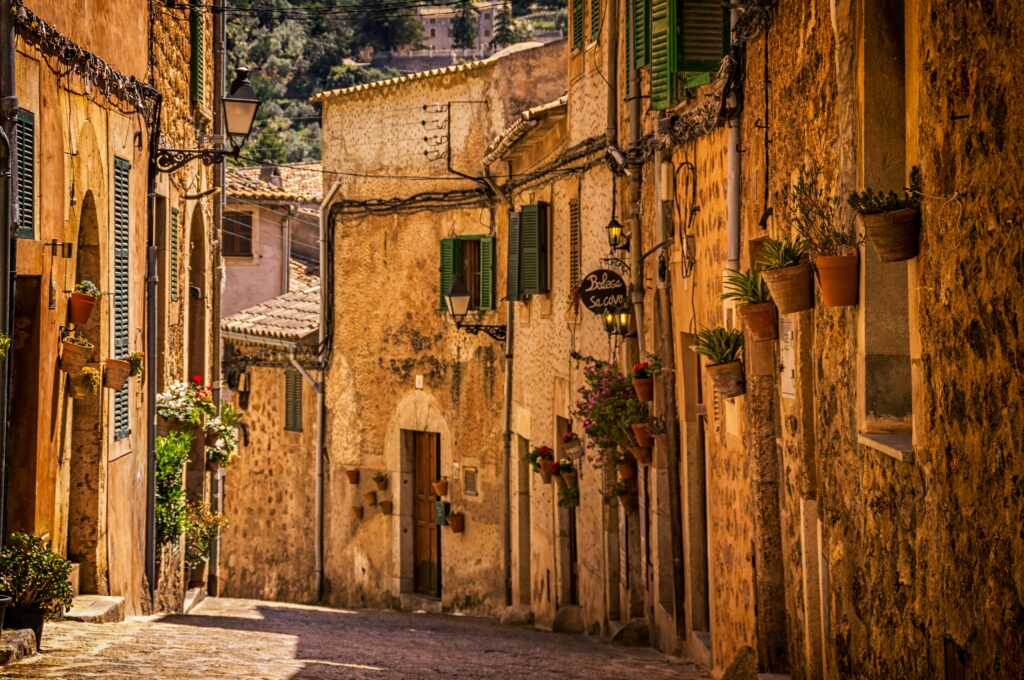
A practical snapshot for overseas retirees
Best for
Retirees seeking a relaxed lifestyle with strong public services
People who value healthcare access, walkability, and social life
Those drawn to regional variety within a familiar European setting
Retirees comfortable adapting to local rhythms and customs
At a glance
- Cost of living: Moderate
- Healthcare: High quality
- Residency: Moderate
- English: Moderate
Cost of living overview
Spain offers a cost of living that many retirees find balanced and sustainable. Everyday expenses such as groceries, dining, public transportation, and utilities are generally lower than North American expectations, while housing costs depend heavily on region and demand.
Major cities and popular coastal areas can be expensive, particularly in desirable neighborhoods. Smaller cities, inland regions, and less tourist-focused areas often provide excellent value without sacrificing access to healthcare, transportation, or cultural life.
Many retirees find Spain financially comfortable rather than cheap. Living well is achievable without luxury spending, especially when daily life centers around local markets, public transit, and community-based routines.
Healthcare reality
Healthcare is one of Spain’s strongest foundations for retirees.
The public healthcare system is comprehensive, accessible, and highly regarded. Once enrolled, residents benefit from broad coverage, minimal out-of-pocket costs, and access to a large network of doctors and hospitals. Private healthcare is also widely available and often used for faster access or added convenience.
Healthcare professionals are well trained, facilities are modern, and care quality is consistent across much of the country. For many retirees, healthcare in Spain feels dependable and integrated into everyday life.
Residency basics
Spain offers residency options for retirees based on financial independence and health insurance coverage.
The process is formal and documentation-heavy, with clear requirements and structured procedures. Timelines can vary, and attention to detail is important, but the system itself is predictable once understood.
Residency typically assumes a meaningful connection to Spain, and many retirees choose to establish it as their primary residence rather than a short-term or seasonal base.
What it feels like to live in Spain
Living in Spain often feels social, unhurried, and community-oriented.
Daily life emphasizes time spent outdoors, shared meals, and neighborhood interaction. Walkability is a major quality-of-life advantage in many towns and cities, and public spaces play a central role in social life.
Culturally, Spain values relationships, flexibility, and enjoyment of daily routines. Administrative processes can feel slow, but everyday life is often rich in connection and rhythm. For many retirees, this balance is a major draw.
Lifestyle & trade-offs
Why people choose Spain
- High-quality public healthcare
- Strong sense of safety and personal security
- Walkable cities and effective public transportation
- Warm climate in many regions
- Active social and outdoor lifestyle
Common challenges
- Bureaucracy that requires patience
- Language expectations in administrative settings
- Seasonal crowding in popular regions
- Regional differences in cost and infrastructure
Who Spain is not for
Spain may not suit retirees seeking very low living costs, fast administrative processes, or minimal language engagement. It can also frustrate those who prefer rigid schedules or expect systems to prioritize efficiency over social norms.
Common Questions
Where should I actually retire in Spain—Costa del Sol, Valencia, Andalusia, or somewhere else?
Spain’s regional diversity means “best” depends entirely on priorities. Costa del Sol (Málaga, Marbella) offers established expat communities, English services, warm winters, but higher costs and heavy tourism. Valencia provides coastal living, vibrant culture, excellent food scene, and lower costs than Barcelona or Madrid, with growing expat presence. Andalusia (Seville, Granada, Córdoba) delivers authentic Spanish culture, lower costs, stunning architecture, but intense summer heat and fewer expats. Smaller cities like Alicante, Murcia, or northern coastal areas (Galicia, Asturias) offer affordability and character with fewer English speakers. Barcelona and Madrid provide world-class urban amenities but at premium prices. Most successful retirees visit multiple regions before deciding—climate tolerance, budget, desire for expat community versus cultural immersion, and healthcare proximity all matter significantly.
What’s Spain’s non-lucrative visa, and how hard is it to qualify?
Spain’s non-lucrative visa (NLV) allows non-EU retirees to live in Spain without working, based on proof of sufficient passive income and savings. Requirements include approximately €28,000-€30,000 annual income (higher for couples), plus savings buffers of around €70,000+, comprehensive private health insurance, and proof of Spanish accommodation. The application is processed through Spanish consulates abroad and requires apostilled documents, background checks, and strict financial documentation. Processing takes 1-3 months typically. The visa is renewable annually for up to five years, after which you can apply for permanent residency. It’s achievable for retirees with legitimate pensions and savings, but the financial thresholds are substantial and strictly enforced. Many use immigration attorneys to ensure documentation meets exact consulate requirements, which vary slightly by location.
How does Spain compare to Portugal for retirement?
Spain and Portugal share many similarities but differ in key ways. Spain is larger with more regional variety, slightly lower overall costs outside major cities, better public transportation networks, and arguably richer cultural depth. Portugal has become more expensive due to foreign demand, offers higher English proficiency, and until recently had better tax incentives (NHR program, now ended). Both have excellent public healthcare, EU access, and Mediterranean lifestyles. Spain feels more socially vibrant with later dining hours and louder street life; Portugal feels quieter and more reserved. Spain’s bureaucracy is notoriously slow; Portugal’s is structured but equally deliberate. For pure affordability outside capitals, Spain edges ahead. For ease of English communication and compact geography, Portugal wins. Both require similar residency processes and language commitment for full integration.
Can I access Spain’s public healthcare system as a foreign retiree?
Yes, but the pathway depends on your residency status and situation. Once you obtain legal residency and register with Spanish social security, you can access the public healthcare system. However, initial visa applications (like the non-lucrative visa) require proof of comprehensive private health insurance, which you must maintain until eligible for public coverage. After living in Spain legally and contributing through taxes or registering as a resident, you can apply to join the public system. Some retirees maintain private insurance permanently for faster access and choice, while using public healthcare as backup. EU/EEA citizens have easier access through reciprocal agreements. The public system is excellent once you’re in it, but getting enrolled requires navigating residency requirements, registration (empadronamiento), and sometimes proving you’re not a burden on the state. Legal guidance helps clarify the specific pathway for your situation.
Want the deeper comparison?
This profile covers the fundamentals.
Overseas by Design evaluates Spain alongside other retirement destinations by examining real monthly budgets, residency pathways, healthcare access, and the practical trade-offs that emerge when countries are assessed using the same framework.