

The Part of Retirement No One Prepares You For
Most retirement advice focuses on money. How much you need. How long it will last. Where you can stretch it further.
All that is certainly important. Retirement simply doesn’t work if the numbers don’t line up.
But very little prepares you for what comes after. What your days actually look like. Who you are when your career is no longer part of the equation. And how you fill the space that work used to occupy. Being emotionally ready for retirement is often overlooked, but it’s really the important part.
It’s something I’ve been thinking about more lately, especially after a few conversations with my wife Heather.
After more than 30 years as a teacher, her days have been structured, purposeful, and full. There’s a rhythm to it. A sense of identity that comes with showing up, contributing, and knowing exactly where you fit. Take that away, and what replaces it?
It’s not always obvious.
The Hidden Side of Retirement
A lady I know, Cheryl Fimbel, recently published a book called The Hidden Side of Retirement: What Nobody Tells You About Identity, Purpose, and Life After Your Career Ends.
It’s not another book about financial planning. Lord knows, we really don’t need another one of those! No, this book is about the emotional side of retirement preparedness.
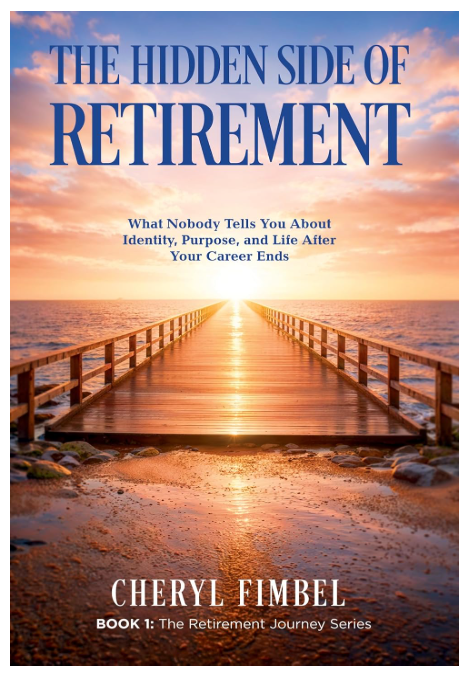
Cheryl wrote it from her own experience of being unexpectedly retired after a 45-year career. She hadn’t considered the importance of getting emotionally ready for retirement. And what she realized is that most people have their financial ducks in a row, but they’re completely unprepared for the hard questions:
“Who am I in retirement?” “How do I define myself when my career is over?” “What gives my life meaning now?”
What stood out to me were the assessment tools she included. They’re designed to help you think through things most people don’t stop to consider:
- What gives your life meaning now
- How much of your identity is tied to your work
- What you’re actually retiring toward, not just what you’re leaving behind
I worked through her first toolkit, the Retirement Readiness Assessment Suite. And it was eye-opening.
Not in a dramatic way. But in the quiet, uncomfortable way that makes you realize you haven’t thought something through as deeply as you assumed you had.
It’s the perfect gut check before pulling the plug on your career. Because it forces you to sit with questions that are easy to avoid when you’re still busy working.
Retiring From vs. Retiring To
I think a lot of people retire from something. From the job. From the stress. Sometimes it’s just from the routine. But they haven’t really defined what they’re retiring to.
And I think that’s where things can start to get uncomfortable.
Without structure, days can feel unanchored. Without a clear sense of purpose, it’s easy to drift. And without thinking it through ahead of time, retirement can feel less like freedom and more like something’s missing.
You hear stories about it all the time. People who retire and then struggle to find their footing. Not because they made a mistake. But because no one prepared them for this part.
The Challenge of Finding Identity Outside of Work
This is something my wife and I have been wrestling with.
For more than three decades, teaching has been a huge part of who she is. Not just what she does, but how she sees herself. It’s deep in her DNA. The work is meaningful. It’s highly structured. And it comes with built-in purpose.
So when that ends, what is left to fill that big, empty space?
We’ve had some tough conversations about it. The kind where you realize you’re both a little uncertain about what comes next.
At one point, I joked that maybe we should just create completely new identities for ourselves. Change our names. Fake passports. Start fresh. Oddly enough, she didn’t laugh as hard as I’d hoped.
But the underlying question is real: How do you define yourself when the thing that’s defined you for decades is no longer there?
And it’s not just Heather. I’ve spent years building a career too. My work has given me structure, relevance, and a sense of contribution. I’m an expert in my field. But when all that disappears, who am I?
It’s not a question you can answer in one conversation. Or even one assessment. But it’s a question worth sitting with before you make the leap.
Why This Matters Even More If You’re Thinking About Moving Abroad
It’s easy to assume that a new country solves this. Warmer weather. Different pace of life. New surroundings. But a change in location doesn’t automatically create a sense of purpose. And in some ways, it can amplify the problem.
You’re not just leaving your work behind. You’re also stepping away from familiar routines, social circles, and the environment that helped shape your identity in the first place.
When you retire abroad, you lose more than just your job title. You lose the context that held it. The people who knew what you did. The daily interactions that reinforced who you were.
That’s certainly not a reason not to do it. But it is a reason to think more deeply about what you want your life to look like when you get there. Because if you haven’t figured out who you are without your career, moving to another country won’t figure it out for you.
Designing What Comes Next
This is something Heather and I have talked about a lot. What does a typical day look like? What fills our time in a way that feels meaningful, not just busy? How do we create structure without falling back into the same patterns we’re trying to leave behind?
Those questions matter just as much as where we live. Maybe more. Because retirement isn’t just a financial transition. It’s a personal one.
And the better prepared you are for that side of it, the more likely you are to actually enjoy what comes next.
A Book Worth Reading
If you’re getting close to retirement, or you’re already there and feeling a little untethered, I’d recommend picking up Cheryl’s book.
It’s not going to give you a five-step plan or tell you exactly what to do. But it will help you ask the right questions. The ones most people don’t think about until it’s too late.
You can find it here: The Hidden Side of Retirement on Amazon.
And if you do read it, let me know what you think. I’d be curious to hear how it lands for you.
Still Wondering If Retirement Will Ever Work?
You’ve just read one perspective on why traditional retirement planning feels increasingly out of reach.
The Retirement Lie goes deeper — explaining why the “save more, work longer” advice was never designed for most people, and how ordinary retirees are quietly building affordable, fulfilling lives overseas instead.
It’s short. It’s honest. And it’s meant to change how you think about what’s possible next.