

There’s a version of retirement that lives in your head. Maybe it involves a small apartment in Lisbon, or a house in the south of France, or just six months somewhere warm while the winter does its thing back home. It’s the version where living abroad in retirement stops being a someday idea and starts feeling like an actual plan. You’ve thought about the food, the slower pace, the feeling of waking up without an alarm and having nowhere you have to be.
What you probably haven’t thought about is your prescriptions.
Or your cat.
Or what happens to your mail.
I’m not saying this to burst the bubble. The dream is real and worth chasing. But there’s a gap between imagining the life and actually engineering it, and most retirement planning content skips right over that gap. It’s not glamorous to talk about. Nobody wants to read a listicle called “37 Things to Do Before You Leave the Country.” But if you’re serious about spending part of the year abroad while keeping your home base, the logistics are where the dream either holds together or quietly falls apart.
these are all the unsexy things we’ve been dealing with in our own planning. And honestly, this is the stuff about planning a retirement abroad that is not a lot of fun. But it needs to be done, and we’re so much better off with getting it done and out of the way. So we really can start focusing on the “dream” part of retiring.
So let’s talk about the stuff nobody else is talking about.
Your home doesn’t take care of itself
If you own a home and you’re leaving for three to six months, you have a decision to make. Do you leave it empty? Rent it out short-term? Find a housesitter?
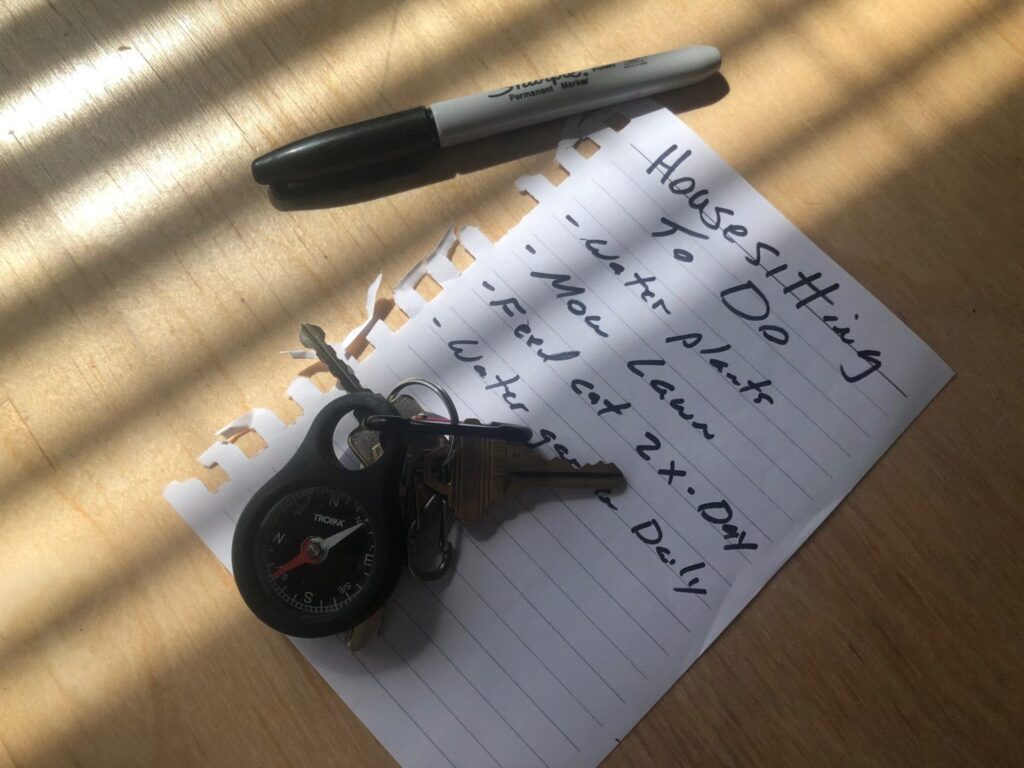
Each one of those options comes with its own set of complications. Leaving it empty might feel safe, but it also means no one’s there if a pipe bursts or a roof starts leaking. Short-term rentals can generate income, but they also mean coordinating cleanings, managing guests, and possibly running into HOA restrictions or local regulations you didn’t know existed. A housesitter can be a great middle ground, but finding someone you actually trust, and setting clear expectations about what “taking care of the place” means, takes more time and energy than you’d think.
And then there are the pets. If you have a dog or a cat who can’t travel with you, you’re not just finding a housesitter. You’re finding someone who’s also a pet sitter, who understands your animal’s quirks, who knows where the vet is, and who you’d trust with something that genuinely matters to you. That’s a different kind of search.
The prescription problem is real
Here’s one that catches people off guard. Most health insurance plans, including Medicare, have limits on how far in advance they’ll fill a prescription. If you’re leaving for six months and you take a maintenance medication, you can’t just walk into a pharmacy and ask for a six-month supply. You’ll likely hit a 90-day wall.
That means you need a plan. Some people work with their doctor to time refills carefully before they leave. Others look into whether their medication is available in the country they’re going to, and what it costs out of pocket. Some look at mail-order pharmacy options that can ship internationally. None of these are hard to solve, but none of them solve themselves either. You need to start asking these questions months before you go, not weeks.
The part of living abroad in retirement nobody plans for
Think about everything that runs on autopilot right now. that could include your utilities, your internet, your car insurance. Don’t forget your property taxes. And your bank, which may flag your account for suspicious activity the moment you start making purchases in another country and lock you out of your own money.
Before you leave, you’ll want to notify your bank and any credit card companies about your travel. You’ll want to think about whether you need a card with no foreign transaction fees. Additionally, you’ll want to sort out what’s on autopay, what might lapse, and what needs a human eye on it periodically. You’ll want someone who can handle mail, especially anything that can’t be forwarded, like jury summons, tax documents, or something from your HOA that requires a response.
None of this is complicated. It’s just time-consuming, and most people underestimate how much of it there is until they’re staring down a departure date.
The question worth sitting with
Here’s what I want you to take from this. The logistics aren’t a reason not to go. They’re just the price of admission for a life that’s bigger than the one most people settle for in retirement. And here’s the thing: once you’ve done it the first time, you have a system. The second time is so much easier.
But the people who actually pull it off aren’t the ones who had the most money or the most courage. They’re the ones who gave themselves enough runway to figure out the details. They started planning long before they felt ready. They asked questions that felt embarrassingly basic. And they didn’t let the checklist become a reason to stay home.
The dream isn’t the hard part. The homework is. And the good news is, homework is something you can actually do.
Still Wondering If Retirement Will Ever Work?
You’ve just read one perspective on why traditional retirement planning feels increasingly out of reach.
The Retirement Lie goes deeper — explaining why the “save more, work longer” advice was never designed for most people, and how ordinary retirees are quietly building affordable, fulfilling lives overseas instead.
It’s short. It’s honest. And it’s meant to change how you think about what’s possible next.